


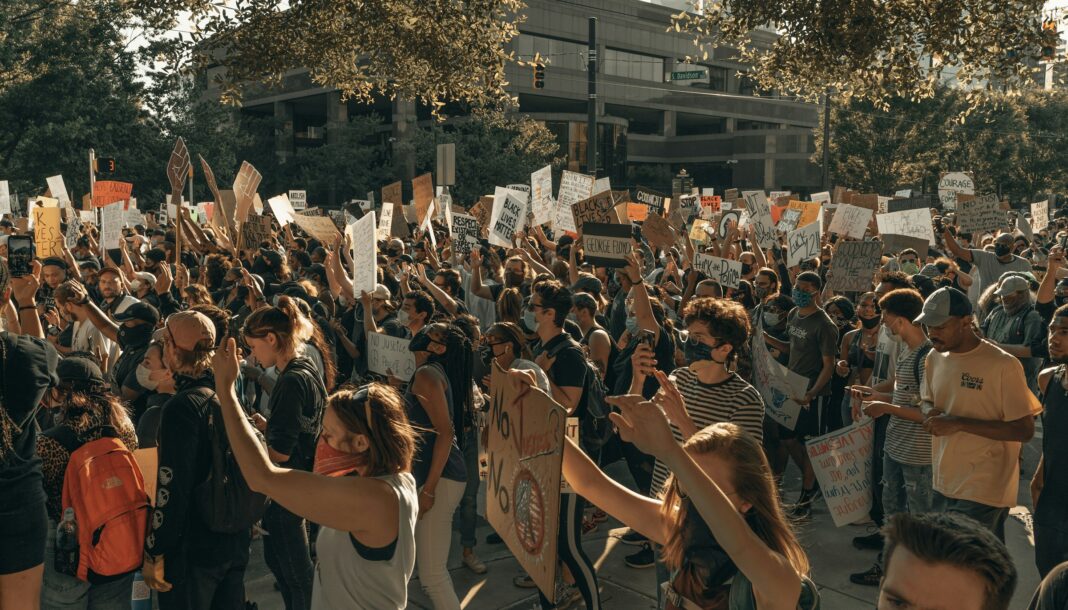
LONDON/WASHINGTON D.C. — From the smoldering frontlines of the Donbas and the ruins of Gaza to the escalating military strikes in Yemen and the political upheaval in Venezuela, the global order appears to be fracturing. However, the most surprising shifts are not occurring on distant battlefields, but within the ideological heart of the West.
In the United Kingdom and the United States—nations that defined themselves through the Cold War as the antithesis of Marxism—a resurgence of communist fervor is taking root. Simultaneously, a quiet but profound spiritual movement is sweeping across the American heartland, as traditional peace walks led by Buddhist monks find an unexpected following among Caucasian families.
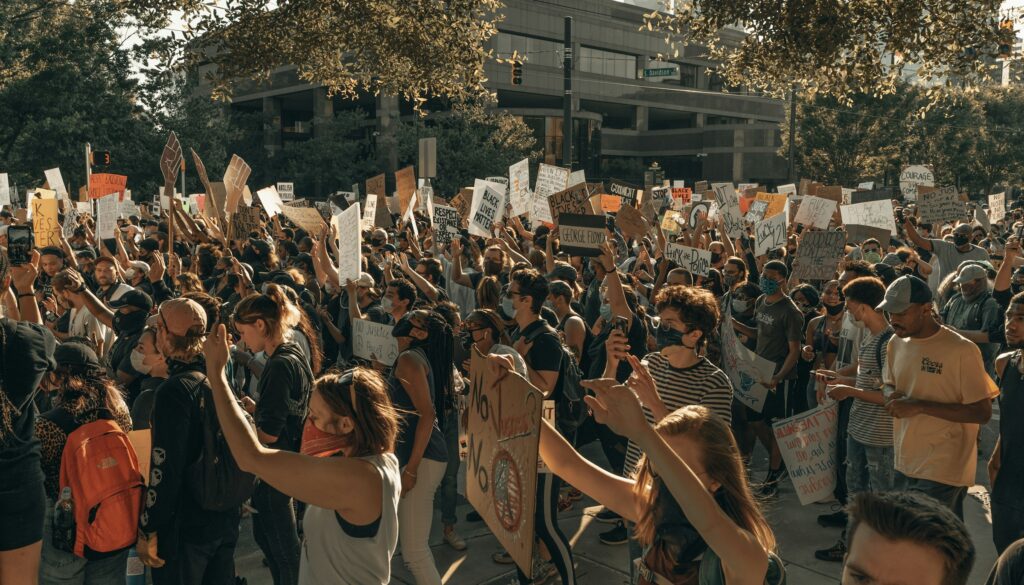
The Return of the “Red Menace”?
For decades, the word “communism” was a political death sentence in Washington and London. Today, it is a recruitment slogan.
In May 2024, the “Revolutionary Communists of America” (RCA) held its founding congress in Philadelphia, the birthplace of American democracy. Hundreds of young activists marched through the streets with red flags, chanting slogans against the capitalist system. According to the group’s organizers, the movement is a direct response to the “perpetual war machine” and the domestic housing crisis.
“The youth are looking at the world around them—the support for the war in Ukraine, the humanitarian catastrophe in Palestine, and the widening gap between the rich and the poor—and they are saying the system is broken,” says Marcus O’Dean, a political analyst focusing on radical movements. “They no longer fear the ‘Satanic’ labels of the 1950s. To them, the current status quo is the greater evil.”
In the UK, the “Revolutionary Communist Party” (RCP) has seen similar growth. Following the “Are You a Communist?” campaign, which saw thousands of stickers and posters plastered across London and Manchester, the party has reported a surge in membership among university students and disillusioned healthcare workers.
War and Policy as Catalysts
The catalysts for this ideological shift are largely rooted in foreign policy. The recent military strikes in the Middle East and the controversial arrest and removal of Venezuelan figures have painted a picture of a Western hegemony that many young citizens find increasingly difficult to defend.
Domestically, the U.S. government’s fluctuating policies—ranging from strict border enforcement to the radical revamping of social safety nets—have left a vacuum of stability. The “oppression versus support” debate regarding immigrants has polarized the electorate, leading some to seek “internationalist” solutions that transcend national borders.
A Walk for Peace in the Heartland
While some are turning to radical politics, others are turning to radical peace.
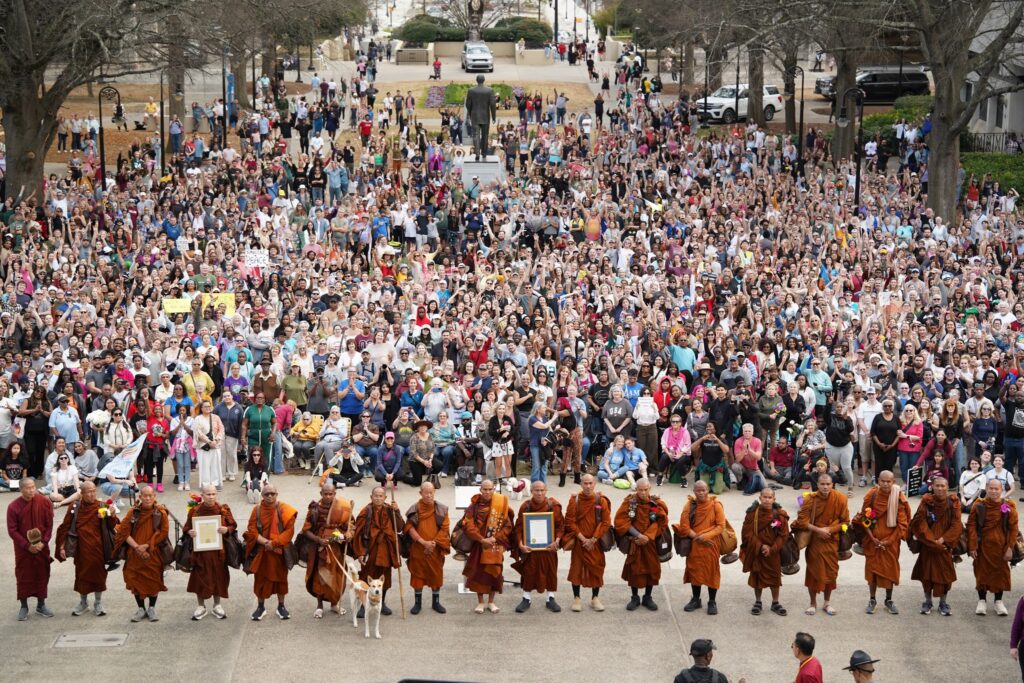
Across the vast highways of the United States, a group of Buddhist monks has been conducting a “Walk for Peace.” Led by figures like the venerable Sutham Nateetong, these monks walk thousands of miles to pray for an end to global conflict.
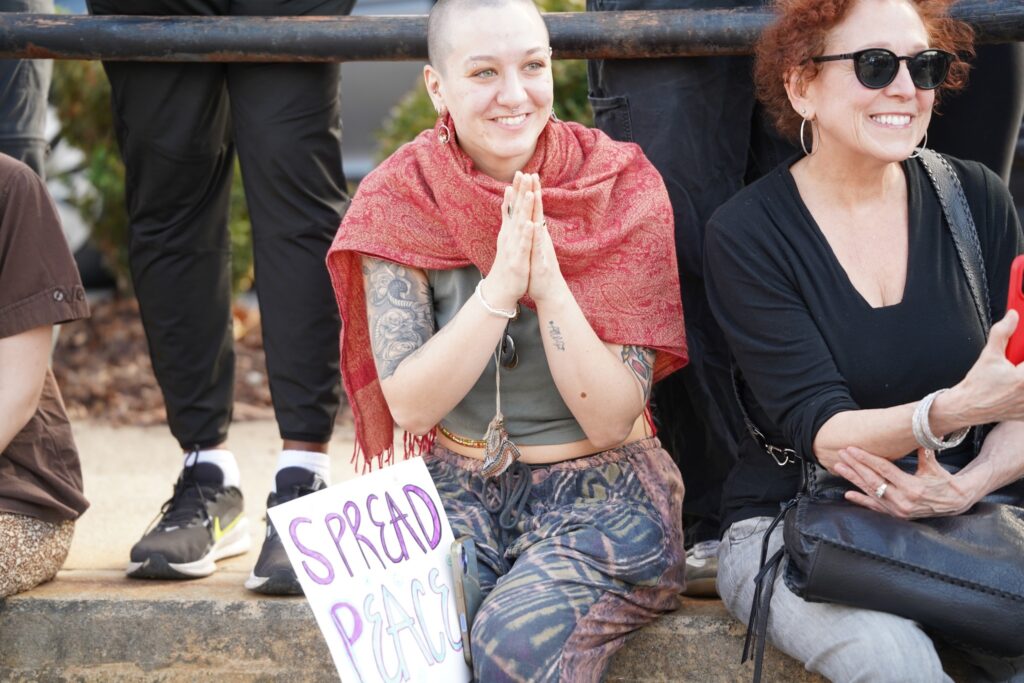
What has stunned observers is the reception. In deep-red states and suburban neighborhoods, images have surfaced of Caucasian families—historically the demographic most insulated from Eastern spiritualism—kneeling on the pavement. In a striking display of humility, these families are seen bowing to the monks, offering water, food, and gifts.
“It is a surreal sight,” says photojournalist Elena Rossi, who followed the walk through Nebraska. “You see families who have lived in these towns for generations, people who might have never left the country, showing a level of reverence to these saffron-robed monks that you usually only see in Southeast Asia. It speaks to a deep, underlying hunger for peace that transcends political party or race.”
Connecting the Dots
The rise of communism and the embrace of Eastern peace traditions may seem like polar opposites, but sociologists argue they spring from the same well of discontent.
“Whether it’s the RCA in Philadelphia or a family bowing to a monk in the Midwest, the message is the same: the current Western paradigm of consumerism and military interventionism is no longer providing the answers people need,” says Dr. Aris Thorne, a researcher in social movements.
As the world watches the unfolding tragedies in Ukraine and Palestine, the internal landscape of the West is changing. The “Satanic” specter of communism is being rebranded as a viable alternative by some, while others find solace in the ancient, non-violent steps of a monk. Both suggest that the “American Century” is facing an internal reckoning unlike any other in modern history.
 தமிழ்
தமிழ் 